Artificial intelligence has evolved rapidly over the past decade, but 2026 marks a turning point: the rise of AI agents. Unlike traditional AI features that simply respond to prompts, AI agents are autonomous systems capable of planning, reasoning, and executing tasks with minimal human intervention. These intelligent agents are transforming how digital products are built, used, and scaled across industries.
From Tools to Autonomous Assistants
Early AI integrations in digital products focused on chatbots, recommendation engines, and predictive analytics. While useful, these systems still required constant human input. AI agents represent the next step in this evolution.
AI agents can independently analyse goals, break them into smaller tasks, and execute them using various tools or software services. For example, the autonomous agent framework AutoGPT demonstrated how AI could perform multi-step objectives such as research, content generation, and workflow automation with minimal supervision.
This shift fundamentally changes the role of AI in digital products. Instead of assisting users with individual actions, AI agents act as digital teammates, managing complex processes behind the scenes.
Smarter Digital Workflows
One of the biggest impacts of AI agents is their ability to automate entire workflows. In modern digital platforms, agents can plan tasks, retrieve data, execute operations, and verify results without constant human guidance.
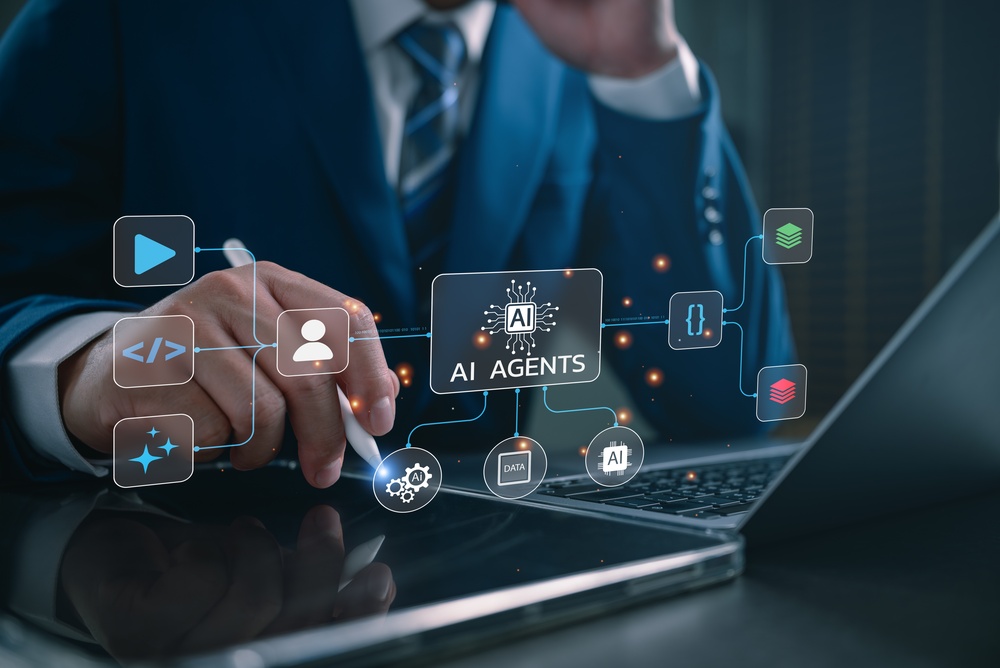
Advanced systems such as Manus use multi-agent architectures where specialised sub-agents collaborate. A planner agent creates execution strategies, while other agents handle data retrieval, task execution, and verification. This modular structure enables software to complete complex objectives more efficiently than traditional automation.
For digital product teams, this means applications can now perform end-to-end tasks such as analysing user behaviour, generating insights, implementing changes, and monitoring outcomes automatically.
AI-Native Product Experiences
Digital products in 2026 are increasingly designed as AI-native platforms rather than traditional software with AI features added later. AI agents sit at the centre of these experiences.
For instance, development tools like Devin AI function as autonomous coding assistants capable of completing software engineering tasks such as debugging, testing, and building features.
In enterprise software, agentic systems are also being embedded into productivity platforms. Large technology companies are integrating agents into workplace tools to automate scheduling, data analysis, coding, and content creation. These capabilities allow digital products to proactively assist users rather than waiting for commands.
Multi-Agent Ecosystems
Another defining trend in 2026 is the rise of multi-agent systems. Instead of relying on a single AI model, digital products now deploy multiple agents with specialised responsibilities.
For example, one agent may handle customer support, another may analyze product analytics, while a third optimises marketing campaigns. These agents communicate with each other, coordinate tasks, and deliver outcomes collectively.
This approach improves scalability and reliability because each agent focuses on a specific domain. It also enables companies to create flexible AI-powered workflows that evolve as business needs change.
Personalized and Proactive User Experiences
AI agents are also redefining how users interact with digital products. Instead of static interfaces, applications are becoming dynamic and adaptive environments driven by intelligent agents.
These agents can observe user behaviour, anticipate needs, and take proactive actions. For example, an AI agent inside a project management platform might automatically generate reports, schedule meetings, or identify project risks before they escalate.
This proactive approach improves productivity and reduces friction in digital workflows. According to industry analysis, AI copilots and agents are expected to be embedded in the majority of enterprise applications by 2026, helping users complete tasks faster and more efficiently.
The Future of Agent-Driven Products
The rise of AI agents signals a shift toward what many researchers call the “agentic web”—an ecosystem where autonomous systems collaborate with humans and other agents to accomplish complex digital tasks.
For product builders, this transformation introduces new opportunities and responsibilities. Designing agent-powered products requires robust governance, security safeguards, and clear human oversight to ensure agents operate safely and ethically.
However, the potential benefits are enormous. By automating complex workflows, enhancing personalisation, and enabling autonomous decision-making, AI agents are redefining what digital products can do.
As we move further into 2026, the most successful digital platforms will not simply use AI—they will be built around intelligent agents that work alongside humans to deliver smarter, faster, and more adaptive experiences.